Table of Contents
ToggleWhat Is Artificial Intelligence
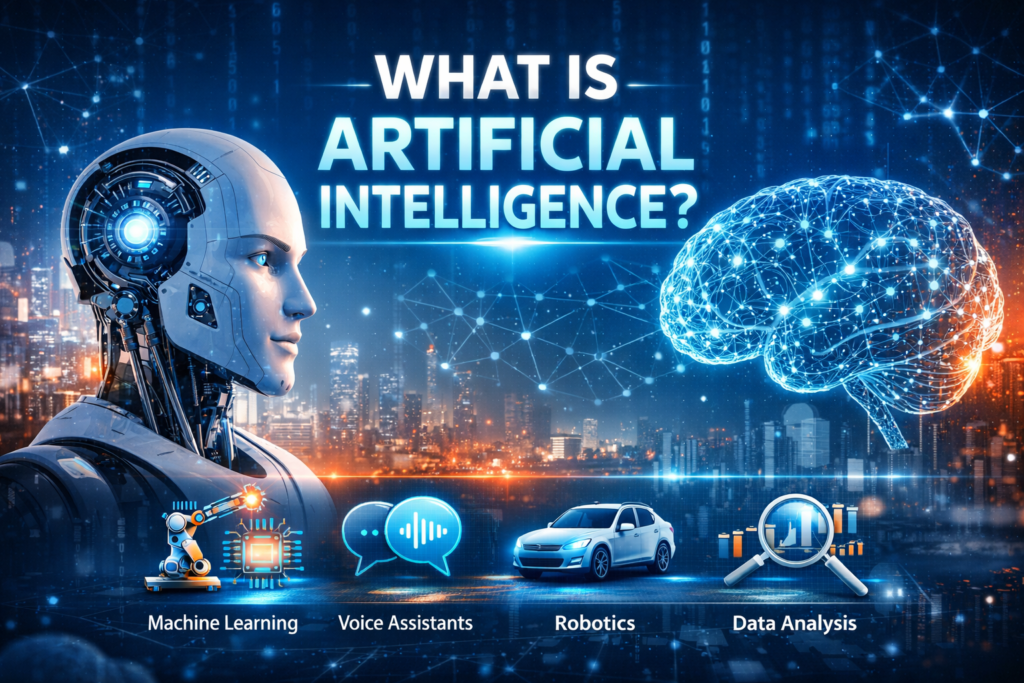
Artificial intelligence is one of the most powerful technologies shaping the modern digital world. Many people search online to understand what is artificial intelligence and how it works in real life.
In simple words, what is artificial intelligence refers to machines or computer systems designed to perform tasks that normally require human intelligence. These tasks include learning, reasoning, understanding language, recognizing images, and making decisions.
Artificial intelligence is used in smartphones, search engines, online shopping platforms, and smart home devices. Companies around the world are investing heavily in AI because it improves efficiency and automation.
According to research published by
https://www.ibm.com/topics/artificial-intelligence
artificial intelligence enables machines to learn from data, identify patterns, and make decisions with minimal human intervention.
Understanding what is artificial intelligence helps people see how technology is transforming industries and daily life.
Artificial Intelligence Definition
To clearly understand what is artificial intelligence, it is important to look at its basic definition.
Artificial intelligence is a branch of computer science that focuses on creating systems capable of performing tasks that usually require human intelligence such as learning from experience, solving problems, and understanding language.
When discussing what is artificial intelligence, experts often describe it as technology that allows machines to mimic human thinking and decision making.
Key characteristics of artificial intelligence
• Learning from data
• Problem solving ability
• Speech recognition
• Image recognition
• Decision making capability
These abilities show how what is artificial intelligence goes beyond simple programming and allows machines to improve performance over time.
Key characteristics of artificial intelligence
Another important question people ask is what is artificial intelligence and how does it work.
Artificial intelligence works by combining large datasets, algorithms, and powerful computing systems. AI systems analyze huge amounts of data and detect patterns that help machines make predictions or decisions.
Main components of AI systems
- Data
Data is the foundation of artificial intelligence. Machines learn from large amounts of information.
- Algorithms
Algorithms process data and detect patterns.
- Machine learning models
Machine learning allows systems to improve automatically through experience.
- Computing power
Advanced processors help analyze large datasets quickly.
If you want to learn more about related AI technologies, read our internal guide about machine learning basics on our website.
Many modern systems use neural networks that simulate the structure of the human brain. This technology plays a key role in explaining what is artificial intelligence in practical applications.
For more technical explanation visit
https://www.microsoft.com/en-us/ai/what-is-ai
How Artificial Intelligence Works
Understanding what is artificial intelligence also requires learning about the different types of AI systems.
| Type | Description | Example |
|---|---|---|
| Narrow AI | Designed for a single task | Voice assistants |
| General AI | Human level intelligence | Research stage |
| Super AI | Beyond human intelligence | Theoretical |
Narrow Artificial Intelligence
Most AI applications today are narrow AI. These systems perform one specific task such as recommendation systems or speech recognition.
Artificial General Intelligence
General AI refers to machines capable of performing any intellectual task that humans can do. Researchers are still developing this technology.
Artificial Super Intelligence
This type of AI would surpass human intelligence in all fields. It currently exists only as a concept in research discussions about what is artificial intelligence.
Technologies Used in Artificial Intelligence
To fully understand what is artificial intelligence, it is helpful to explore the technologies behind it.
Machine learning
Machine learning allows computers to learn patterns from data and improve their accuracy.
Deep learning
Deep learning uses neural networks with many layers to analyze complex information like images and speech.
Natural language processing
Natural language processing allows machines to understand human language and respond intelligently.
Computer vision
Computer vision helps machines interpret images and videos.
These technologies form the foundation of modern artificial intelligence systems.
Many AI systems also use neural networks that mimic the structure of the human brain to process information.
Real World Examples of Artificial Intelligence
People often ask what is artificial intelligence used for in everyday life. The answer is that AI is already integrated into many digital tools.
Popular AI examples
• Voice assistants like Siri and Alexa
• Recommendation systems on Netflix and Amazon
• Self driving car technology
• Online customer service chatbots
• Fraud detection systems in banks
Search engines also use artificial intelligence to deliver better results and understand user queries.
You can explore more AI examples at
https://www.oracle.com/artificial-intelligence/what-is-ai/
These applications clearly demonstrate what is artificial intelligence in action
Common Technologies Used in Artificial Intelligence
Artificial intelligence includes several subfields that enable intelligent machines.
Machine learning
Machine learning allows computers to learn patterns from data without explicit programming.
Deep learning
Deep learning uses neural networks with multiple layers to analyze complex data such as images and speech.
Natural language processing
Natural language processing enables machines to understand and respond to human language.
Computer vision
Computer vision helps machines analyze images and videos.
These technologies allow AI systems to perform tasks like speech recognition, translation, and image classification.
Real World Examples of Artificial Intelligence
Artificial intelligence is already used in many daily applications.
Popular AI examples
• Voice assistants such as Siri and Alexa
• Recommendation systems on Netflix and Amazon
• Self driving car technology
• Chatbots used for customer support
• Fraud detection in banking systems
Many search engines and digital platforms also rely on AI algorithms to deliver relevant results and personalized experiences.
Benefits of Artificial Intelligence
Artificial intelligence provides many advantages across industries.
Major benefits
• Faster data analysis
• Increased automation
• Improved decision making
• Higher productivity
• Personalized user experience
Businesses use AI to improve efficiency, reduce operational costs, and deliver better customer services.
Artificial Intelligence Applications
Artificial intelligence is transforming multiple industries.
| Industry | AI Application |
|---|---|
| Healthcare | Medical diagnosis and drug discovery |
| Finance | Fraud detection and risk analysis |
| Transportation | Self driving vehicles |
| E commerce | Product recommendations |
| Education | Personalized learning platforms |
AI systems help organizations process huge volumes of data and generate useful insights for better decisions.
Challenges of Artificial Intelligence
Although AI offers many benefits, it also creates challenges.
Common concerns
• Data privacy issues
• Job automation and workforce changes
• Ethical use of AI technology
• Bias in algorithms
• Security risks
Researchers and governments are working on regulations and ethical frameworks to ensure responsible use of artificial intelligence.
Future of Artificial Intelligence
Artificial intelligence will continue to evolve rapidly in the coming years.
Experts believe AI will improve areas such as healthcare, education, climate analysis, and scientific research. It may also lead to new innovations in robotics, automation, and smart cities.
As computing power and data availability increase, AI systems will become more advanced and capable of solving complex problems.
Learn More About AI Technology
If you want to understand AI deeper, read our detailed guide about machine learning basics on our website. This article explains how machines learn from data and how it powers modern AI systems.
Conclusion
Artificial intelligence is a powerful technology that allows machines to perform tasks normally requiring human intelligence. By using data, algorithms, and machine learning, AI systems can learn patterns, make decisions, and improve performance over time.
Today AI powers many digital tools including recommendation systems, voice assistants, and smart automation. As technology continues to develop, artificial intelligence will play an even greater role in shaping the future of industries and everyday life.
Understanding what artificial intelligence is helps individuals and businesses prepare for the digital transformation happening around the world.
FAQs About Artificial Intelligence
What is artificial intelligence in simple words
Artificial intelligence is technology that allows machines or computers to perform tasks that normally require human intelligence.
What are examples of artificial intelligence
Examples include voice assistants, recommendation systems, chatbots, and self driving car technology.
Is artificial intelligence the same as machine learning
No. Machine learning is a subset of artificial intelligence that helps machines learn from data.
Why is artificial intelligence important
AI helps automate tasks, analyze large datasets, and improve decision making across industries.
Can artificial intelligence replace humans
AI can automate some tasks but it mainly works as a tool that assists humans rather than replacing them completely.